

Traditional photovoltaic modules produce strong specular reflection, causing severe light pollution. Glare from solar panels disturbs daily work and life, and even creates hidden traffic‑safety risks for roads, airports and office districts. Such glare issues have become a major obstacle for PV deployment in densely‑populated and vision‑sensitive zones. Our second‑generation anti‑glare PV modules solve this pain point, balancing clean‑energy generation with visual‑safety protection.

Verified by TÜV NORD testing under ISO 2813 standards, our anti‑glare module reaches an ultra‑low 60° gloss value of 1.3 GU, well below the 7 GU requirement in Japan’s functional PV specification. The advanced micro‑structured glass diffuses harsh reflected light instead of generating sharp mirror‑like glare. This anti‑glare capability lasts for the full service life of the panel without performance decay. Equipped with N‑type TOPCon cells, the product delivers high power output and excellent bifacial yield, plus superior weak‑light response for better generation performance during cloudy mornings and evenings.
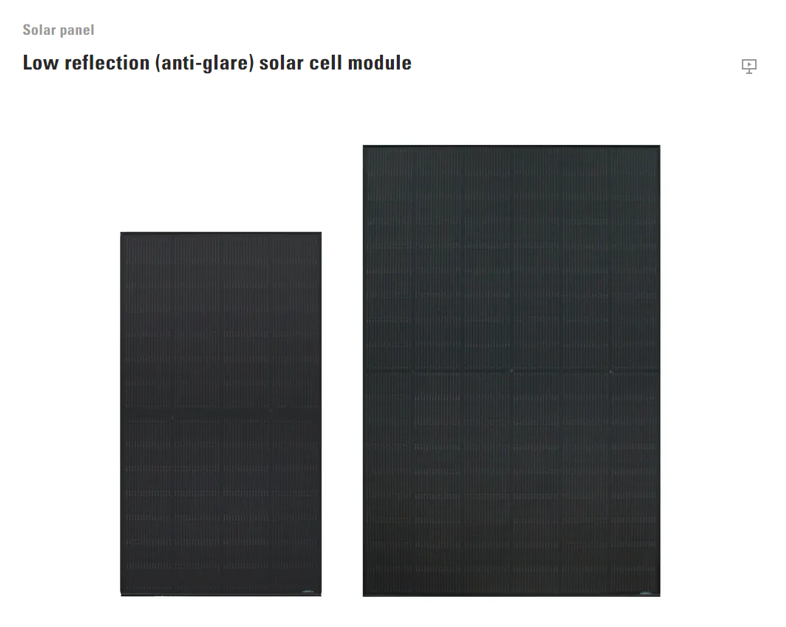
Additional practical optimisations include dust‑proof drainage grooves, which effectively suppress hot‑spot risks and power drop‑offs caused by dust accumulation. Multiple form‑factor options cover small‑size distributed projects and large‑size installations near transport hubs and airports. This product has won the overseas G‑Mark Good Design Award, recognising its outstanding industrial‑design quality.

The anti‑glare PV solution fits diverse glare‑sensitive locations: densely‑populated sites, commercial office buildings, campuses, major traffic arteries and airport surroundings. While producing green renewable power, it minimises light‑pollution harm to people nearby and builds safer surroundings. Instead of choosing between power output and visual comfort, project owners can achieve both clean‑energy targets and public‑safety requirements with one integrated module solution.


